The Fiber on the Label: What Cotton, Linen, Wool, and Synthetics Feel Like
Cotton, linen, wool, and synthetics each bring a different mix of texture, drape, warmth, and care. Learn what a fiber label can suggest—and how to choose by feel and use.
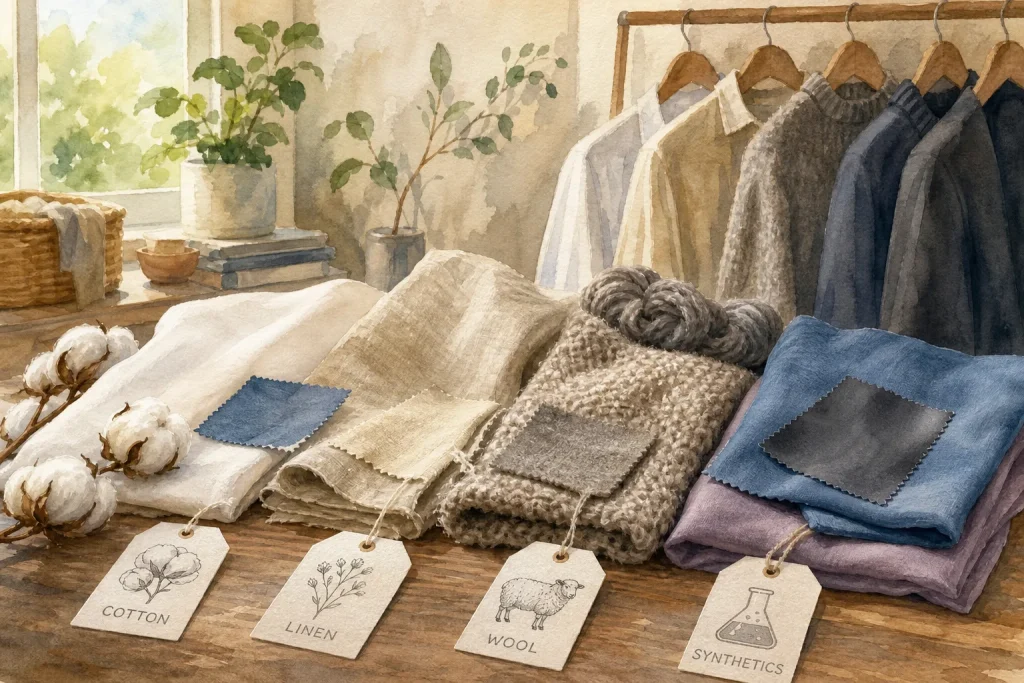
Two shirts can share the same color and cut yet feel entirely different in your hands: one crisp and cool, the other soft and springy. The fiber label offers a useful first clue. Cotton, linen, wool, and synthetic fibers each tend to bring recognizable qualities, though yarn, weave, finish, and fabric weight can change the result. Read the label as a hint about the cloth, not a full description of how it will feel.
Start with the fibers, then notice the fabric
A fiber is the raw material spun into yarn. Yarn is then knitted or woven into fabric, and finishing treatments can soften, smooth, brush, or stiffen it. That chain explains why “cotton” alone does not promise one particular hand. A fine cotton poplin may feel smooth and crisp; a chunky cotton knit may feel plush and substantial.
Think of fiber as the ingredient and the weave as the recipe. A label identifies the ingredient, but the garment’s structure shapes much of the experience. When you can, look at the cloth, feel its surface, and let it fall over your hand. The label and the fabric work best as a pair.
Cotton suits familiar softness and everyday versatility
Cotton often feels soft, dry, and comfortable against the skin. Depending on construction, it can be light and airy, sturdy and canvas-like, or stretchy when knitted with elastane. A cotton T-shirt usually yields more readily than a crisp cotton shirt, while denim feels firm because its yarn and weave make a denser cloth.
Its structure can make cotton easy to wear across many settings, but it may crease and can lose shape if handled carelessly. The care label matters: some cotton garments tolerate routine washing, while dark colors, delicate knits, and structured pieces call for gentler handling. Heat can also affect fit, so follow the garment’s stated care rather than assuming every cotton item behaves alike.
Cotton is a good starting point if you prefer a familiar, low-fuss feel or want a fabric that comes in many weights and textures. Look beyond the fiber name if you want a particular result: a tightly woven cotton feels different from a brushed flannel or a looped terry cloth.
Linen favors a crisp hand and relaxed drape
Linen, made from flax, often feels cool, dry, and slightly textured. It tends to have a crisp character at first, then soften with wear and washing. Its distinctive creases are part of the fabric’s behavior, not necessarily a sign that a garment is poorly made. A linen shirt may look breezy and relaxed precisely because the cloth does not stay pressed into a smooth surface for long.
The weave affects the feel. A fine linen blouse can be light and fluid; a heavier linen jacket may feel firm and structured. Some garments blend linen with cotton or synthetic fibers to alter softness, drape, or crease behavior. Check the fiber percentages on the label, but judge the cloth itself too: the same blend can feel different in a loose weave and a compact one.
Choose linen if you like an airy feel and do not mind a lived-in finish. It may not suit someone who wants a consistently smooth, sharply pressed look. For care, avoid treating every linen piece as indestructible. A delicate weave or tailored garment may need more restrained washing and drying than a simple casual shirt.
Wool brings spring, insulation, and texture
Wool fibers naturally crimp, giving many wool fabrics a springy feel and helping them trap air. That can make wool garments feel warm without requiring a thick, heavy cloth. Fine merino may feel smooth and soft; coarser wool can feel more textured, and some people find it prickly against bare skin. “Wool” on a label does not tell you which experience to expect.
Knitting and finishing make a large difference. A smooth wool suit fabric lies neatly, while a fuzzy sweater yarn creates a softer, loftier surface. Blends can change the hand again: a wool-and-nylon knit, for example, may feel firmer than a fine, unblended wool fabric, depending on the yarn and construction.
Wool often benefits from thoughtful care. Heat, agitation, and abrupt handling can distort or shrink some wool garments, so check the care instructions before washing. A wool sweater suited to gentle hand washing is not the same care proposition as a structured coat or a piece marked for professional cleaning. Wool suits people who want warmth, resilience, or a naturally textured look and are willing to follow the garment’s specific directions.
Synthetics offer engineered texture and easy movement
“Synthetic” covers many fibers, including polyester, nylon, acrylic, and elastane. Their feel varies widely. Polyester can be smooth, crisp, brushed, or knit into a soft fleece. Nylon often feels slick and strong in lightweight shells. Acrylic can mimic the look of wool, while elastane is generally blended in to help fabric stretch and recover.
These fibers are shaped for particular uses, so the label is less a prediction of one familiar sensation than a clue to the fabric’s design. A polyester blouse can feel fluid; a polyester athletic knit can feel springy and smooth. A small amount of elastane may add give without making the whole garment feel like stretchwear.
Synthetics can be convenient for garments that need movement or a particular drape, but they may feel less absorbent or more clingy than natural fibers to some wearers. Heat sensitivity varies by fiber and construction. Follow the care label, especially around ironing and hot drying, and use a lower, fabric-appropriate setting when the instructions permit pressing.
Blends balance qualities but blur the simple rules
A blend combines fibers to adjust feel, structure, or wear. Cotton with a little elastane may move more easily; wool mixed with a synthetic fiber may feel different from a pure wool knit; linen blended with cotton may be less crisp. These are tendencies, not promises. The yarn, knit or weave, fabric weight, and finishing still have a say.
Read the full fiber list rather than stopping at the first word. A garment labeled with several fibers may behave more like one component than another, depending on how much of each is present and how the fabric is made. The care instructions are a separate, practical clue: they describe the maker’s recommended treatment for that particular garment, not every item made from the same fiber.
Choose by feel, use, and care tolerance
When comparing options, start with the sensation you want against your skin. If you like a soft, familiar surface, reach for a cotton fabric and check whether its knit or weave matches the job. If you want a crisp, cool look and accept visible creasing, consider linen. If warmth and a springy hand matter, examine wool closely for softness and texture. If stretch, a smooth finish, or a specific lightweight structure appeals to you, inspect synthetic fabrics and blends.
Then consider what the garment must do. A work shirt that needs to look polished may call for a different surface from a loose weekend layer. A sweater worn over a base layer can tolerate more texture than one worn next to bare skin. Finally, ask whether the care routine suits you. A fiber that feels wonderful in the fitting room is a less useful choice if its garment instructions do not fit your habits.
Say you are choosing between a crisp linen shirt and a soft cotton one for a warm, casual day. If you want a relaxed silhouette and do not mind wrinkles, choose linen; if you prefer a familiar, smoother feel and expect to wear it often, choose cotton. In either case, check the actual cloth and care label before deciding. That small pause is more reliable than buying by fiber name alone.
Use the label as a clue, not a verdict
Fiber names help you anticipate broad qualities: cotton often feels familiar and adaptable, linen crisp and textured, wool springy and warm, and synthetics highly variable by design. They cannot tell you everything about softness, drape, or comfort. Touch the fabric, notice how it moves, and compare the full fiber content with the care instructions. The best choice is the one whose actual feel and upkeep make sense for the way you plan to wear it.