The Care Label Is a Map, Not a Mystery
Learn how tubs, triangles, squares, circles, and crossed-out symbols work—and how to read them alongside a garment’s seams, finish, and condition.
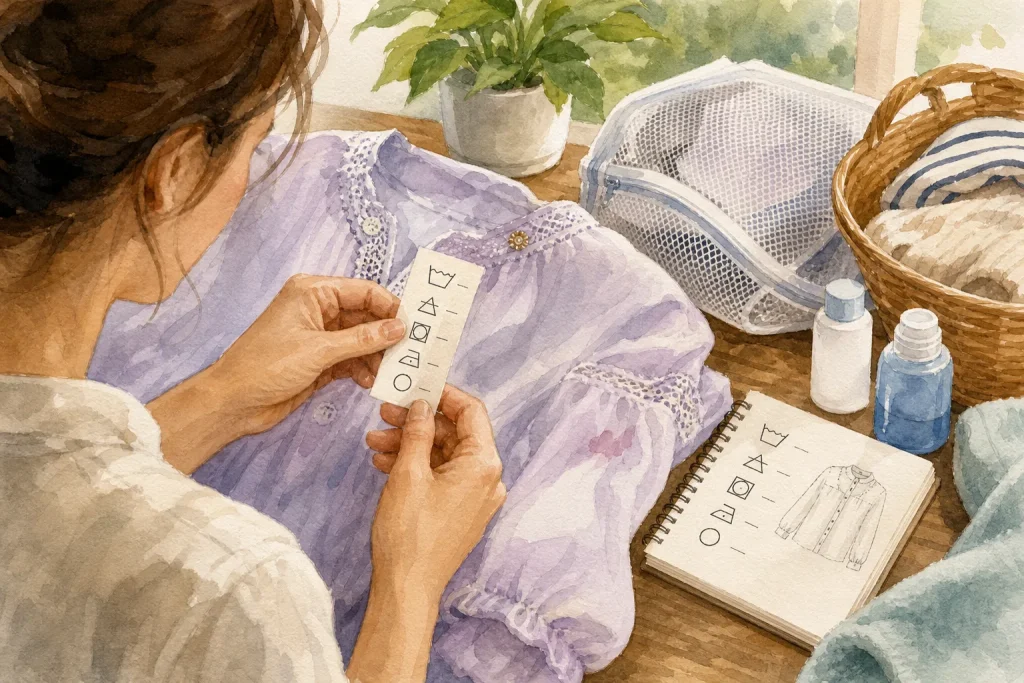
A care label’s symbols are instructions for handling a garment, not a promise that every washing machine will treat it gently. Read the label first, then check the fabric, construction, and current condition before choosing a wash or drying method. Care-label conventions can vary by region and manufacturer, so use the label supplied with the garment as the primary guide and ask a qualified cleaner when a worn or unfamiliar symbol leaves room for doubt.
Start with the washtub
A washtub symbol generally indicates that water washing is permitted, subject to any marks inside or beneath it. A hand in the tub indicates hand washing; a crossed-out tub generally means not to wash with water. Dots commonly convey a temperature limit, but the precise interpretation can depend on the care-label system. Check the label’s accompanying guidance where available, and choose a conservative setting if the marking is unclear.
One or two lines beneath the tub commonly signal progressively gentler machine treatment, such as reduced agitation or a delicate process. They are a caution about handling, not a different cleaning method. Use a gentle cycle and restrained spin when the label calls for them, and leave enough room for the garment to move without being tugged.
The garment itself adds context. A sturdy cotton T-shirt and a delicate blouse may both show a washable tub, but fine stitching, lace, or gathered details can make the blouse more vulnerable. A mesh laundry bag may help limit snagging, though it does not replace the label’s instructions. If the label and the garment’s construction seem to conflict, pause and seek advice rather than assuming the more vigorous option is safe.
Read the triangle before reaching for bleach
The triangle is commonly used for bleach instructions. An empty triangle may permit bleaching; diagonal lines often indicate that only non-chlorine bleach is allowed, while a crossed-out triangle generally means no bleach. Because label systems can differ, check any accompanying wording. If a product is allowed, follow its directions and avoid pouring it directly onto fabric.
“Allowed” does not mean “needed.” For a colored shirt with a small food mark, start with a stain treatment labeled suitable for colored garments and follow its directions. If the label rules out bleach, do not try to work around the instruction by diluting a bleach product.
Use the square to choose how a garment dries
A square is associated with drying instructions. A circle inside the square commonly refers to tumble drying, with dots indicating heat guidance; a crossed-out symbol generally rules out tumble drying. Other marks inside the square can indicate natural-drying methods. A horizontal line commonly points to drying flat, while a curved line near the top commonly indicates hanging to dry. If a mark is faded or unfamiliar, consult the garment maker’s care information rather than guessing.
Heat and gravity can change a garment’s shape. A stretchy knit may distort if it hangs while wet, while a label calling for low tumble heat should not be treated as permission to use a hotter setting. When the label indicates flat drying, arrange the garment on a clean, dry towel, smooth it into shape, and allow air to circulate.
If drying guidance is missing or hard to read, consider the fabric and construction before applying heat. A lined item or one with glued details calls for more caution than a plain, sturdy piece. Air-drying can be a conservative choice if the garment can be supported without stretching, but it does not override a clear label instruction.
Let the iron symbol set the heat ceiling
The iron symbol gives ironing guidance. Dots commonly indicate heat levels, but their exact meaning depends on the labeling system; a crossed-out iron generally means do not iron. A crossed-out steam mark generally means avoid steam. Follow the garment’s instructions, and check the manufacturer’s guidance if the symbols are unclear.
Do not assume a wrinkled garment needs direct heat. Hanging it in a steamy bathroom may help some creases relax, but it is not a substitute for an instruction against steam. For a garment that permits ironing but has a delicate surface, pressing from the inside or using a clean pressing cloth can reduce direct contact. Test cautiously in an inconspicuous area when the fabric and label allow it.
Know when the circle points to professional cleaning
A plain circle commonly indicates professional cleaning instructions. Letters inside it give a cleaner information about the process, while a line beneath the circle can signal gentler treatment. A crossed-out circle generally indicates that dry cleaning is not permitted. The details and conventions may vary, so do not try to reproduce a professional process at home based on a symbol alone.
For a lined jacket or a garment with a structured shape, follow the label and consult a qualified cleaner when professional care is indicated. If the label rules out dry cleaning, ask about suitable alternatives before proceeding. The outer fabric is only part of the picture: lining, interfacing, and trims may respond differently to cleaning.
Check the garment for clues the symbols cannot show
Care symbols cannot describe every stain, loose seam, delicate trim, or aging elastic. Before washing, close zippers, fasten hooks, empty pockets, and turn dark or printed garments inside out when appropriate. Separate items that may snag or transfer color, and choose stain treatment according to the fabric, garment label, and product directions.
Say you have a washable blouse with a gentle-cycle mark, a loose decorative bead, and a mark near the cuff. The starting inputs are the label, the blouse’s construction, the bead’s attachment, and the stain-treatment product directions. First, inspect whether the bead is attached to sturdy fabric or a fragile panel; if it is a simple, secure repair, mend it before washing, but if the panel is delicate, stop and ask a cleaner. Next, check that the stain product is suitable for the blouse’s color and fabric; if it is, apply it as directed, but if it is not, choose a suitable alternative or ask for professional advice. Then place the blouse in a mesh bag and select the gentle wash indicated by its label. The expected observable result is that the cuff mark may lighten and the blouse has less exposure to snagging; if the stain remains or the trim looks strained, do not escalate to harsher products or a stronger cycle.
Choose a method that fits every instruction
Read the symbols as a set: washing, bleaching, drying, ironing, and professional cleaning each address a different part of care. A permitted wash does not automatically permit tumble drying, and an ironing instruction does not cancel a warning about steam. When a symbol is worn off or uncertain, check the garment maker’s care information or consult a qualified cleaner.
-
Washtub: Check for a hand, dots, lines, or a cross; if the mark is clear, follow its washing guidance, but if it is worn or unfamiliar, check the maker’s instructions before washing.
-
Triangle: Check whether it is empty, lined, crossed out, or accompanied by wording; if bleaching is permitted and needed, use only a product allowed by the label, but if the symbol is unclear or forbids bleach, leave bleach out and choose a suitable alternative.
-
Square: Check for a tumble-drying mark or a natural-drying line; if the indicated method is clear, use it, but if it is missing or ambiguous, avoid improvising with heat and consult the maker or a cleaner.
-
Iron: Check for dots, a cross, or a steam warning; if the heat guidance is legible, stay within it, but if it is unclear, avoid direct heat and seek reliable care instructions.
-
Circle: Check for letters, a line beneath the circle, or a cross; if professional cleaning is indicated, take the garment to a qualified cleaner, but if dry cleaning is ruled out or the mark is unclear, ask about an appropriate alternative.
-
Garment condition: Check for loose seams, fragile trim, stains, and stretched elastic; if the garment is sound, proceed with the label’s method, but if a detail may come apart or react poorly, repair it first when appropriate or consult a cleaner.
For everyday laundry, sort by color and fabric weight, follow the most restrictive label in a mixed load, and avoid unnecessary heat. Before putting a garment away, make sure it is dry and check that its seams, fastenings, and shape still look right. Treat an unclear symbol like a smudged address on a package: pause to verify it before sending the garment through the wash.